Here is a quick video I made for you (while sitting in a parking lot!) about a critical choice that is essential to moving your life forward and beyond fear. I know that you will identity with the message. Click Here to watch!

Here is a quick video I made for you (while sitting in a parking lot!) about a critical choice that is essential to moving your life forward and beyond fear. I know that you will identity with the message. Click Here to watch!

Stress is part of life.
Unfortunately, there is no app, supplement, or secret handshake that completely eliminates it. If there were, we’d all own it.
While stress isn’t optional, how you respond to it – and how quickly you bounce back – is entirely up to you.
A commitment to balance, including regular self-renewal, is essential if you want to be successful in your work, relationships, and personal life. Self-renewal isn’t selfish. It’s maintenance.
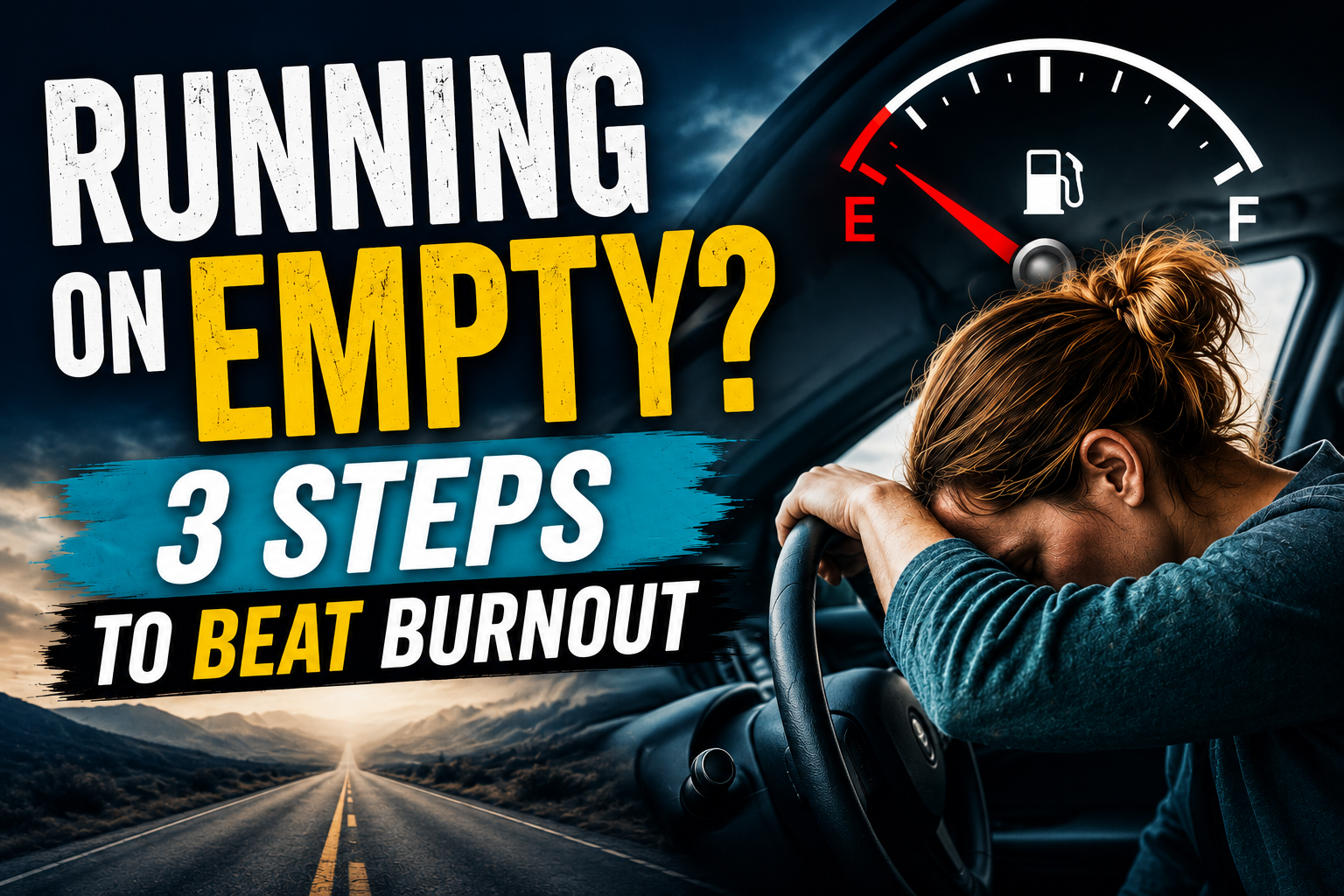
Think of it this way: You wouldn’t expect your car to run forever without gas, oil changes, or an occasional wash. Yet many people expect themselves to operate at full speed indefinitely while surviving on coffee, deadlines, and the vague hope that next month will somehow be less busy.
That’s not a strategy. That’s a countdown. As author Patti Bond wisely said:
“If the snooze button on your alarm is getting as worn out as you are, wake up. You may be burning out.”
Here are three ways to renew yourself before burnout decides to make the decision for you.
One of the greatest obstacles to living from the inside out isn’t what happens to us. It’s what we repeatedly tell ourselves about what happens to us.
Far too many people spend years – sometimes decades – allowing fear, anxiety, and self-doubt to become the loudest voices in their lives. You know the voice.
The one that shows up right before a presentation, a performance, a difficult conversation, or a new opportunity and says:
What’s amazing is that this voice has a terrible track record and yet somehow keeps getting promoted. It predicts disasters that never happen. It exaggerates problems. It questions your abilities.
And despite all of that, many of us continue treating it like a trusted advisor. The longer you listen to that voice, the more convincing it becomes. Eventually, fear stops being something you experience and starts becoming part of who you think you are.
Instead of saying, “I feel anxious,” you begin saying, “I am an anxious person.” Instead of, “I’m nervous about speaking,” it becomes, “I’m just not a speaker.” Fear begins to steal more than your peace of mind. It starts stealing opportunities, relationships, experiences, and dreams.
That’s why learning to manage your inner dialogue is one of the most important skills you can develop.
Step 1: Stop the Thought
When you notice an anxious or self-defeating thought beginning to gain momentum, interrupt it. Immediately.

One of the most common patterns I see in my coaching clients is hesitation.
Not laziness.
Not lack of talent.
Not lack of desire.
Hesitation.
People often know exactly what they want to do, say, create, pursue, or change. The problem is that fear keeps interrupting like an overly cautious consultant who was never hired but still has strong opinions.
Whether it’s speaking in front of a crowd, starting a business, pursuing a creative dream, ending an unhealthy relationship, changing careers, or finally having an honest conversation, fear has a remarkable ability to redirect people straight into the neighborhood of “Maybe someday.”
And unfortunately, ‘someday’ keeps getting postponed.
Instead of acting, people prepare endlessly. They overthink. They research. They make plans. They ask for advice from fourteen different people, including one cousin who has never successfully done anything but somehow still speaks with tremendous authority.
Months pass.
Sometimes years.
Eventually, people become incredibly skilled at avoiding discomfort while convincing themselves they are “still working on it.”
If fear of any kind creates obstacles in your life, performance or business, finding ways to keep yourself grounded and anchored is crucial to managing such anxious moments.
The following 8 simple, yet powerful and effective, tips are valuable during times of feeling extreme anxiety and panic. Practice these whenever you begin to feel anxious and take charge of your mindset and physical self to return to a calm and stress-free life.
As things calm down, let your body relax. Take a steady breath, release the tension, and carry on. Every time you get through one of these, you take a little bit of your power back – and your body learns to be a little less dramatic the next time.

Achieving consistent high performance is crucial for personal and professional success. An effective way to boost your performance is by creating a performance anchor – a set of habits and strategies that help you stay focused, motivated, and productive.
In this post, I share 8 steps to creating a performance, and life, anchor that can supercharge your success.

As I mentioned in my previous post, one of the biggest struggles with anxiety – whether it shows up in public speaking, business, or everyday life – comes down to where your focus is.
A lot of the time, the goal becomes being liked, accepted, or approved of by others. And when that’s the goal, pressure is inevitable. You start overthinking, second-guessing yourself, and worrying about how you’re coming across.
Real change starts when you shift that focus inward. At the root of a lot of anxiety is low self-esteem – not feeling solid in who you are without needing validation from others. Once you see that clearly, you can begin to change it.
Here are three practical ways to move from awareness into real progress.
1) Give yourself credit – especially for small wins
Start paying attention to what you are doing, not just what you’re not.
For example, if speaking up makes you anxious and you volunteer to lead a meeting, it’s easy to dismiss it: “Yeah, but I was nervous the whole time.” Instead, try seeing it for what it is: “That was a big step. I showed up and did something uncomfortable.”
Most people overlook their progress. Small wins get brushed off with thoughts like “that doesn’t count” or “I should be further along by now.” Over time, that mindset builds the belief that nothing you do is ever enough.
But that’s just a habit – and it can be changed.
Start giving yourself permission to feel good about progress, even if it seems small. Progress is still progress. You’re not aiming for perfection; you’re aiming for growth.