
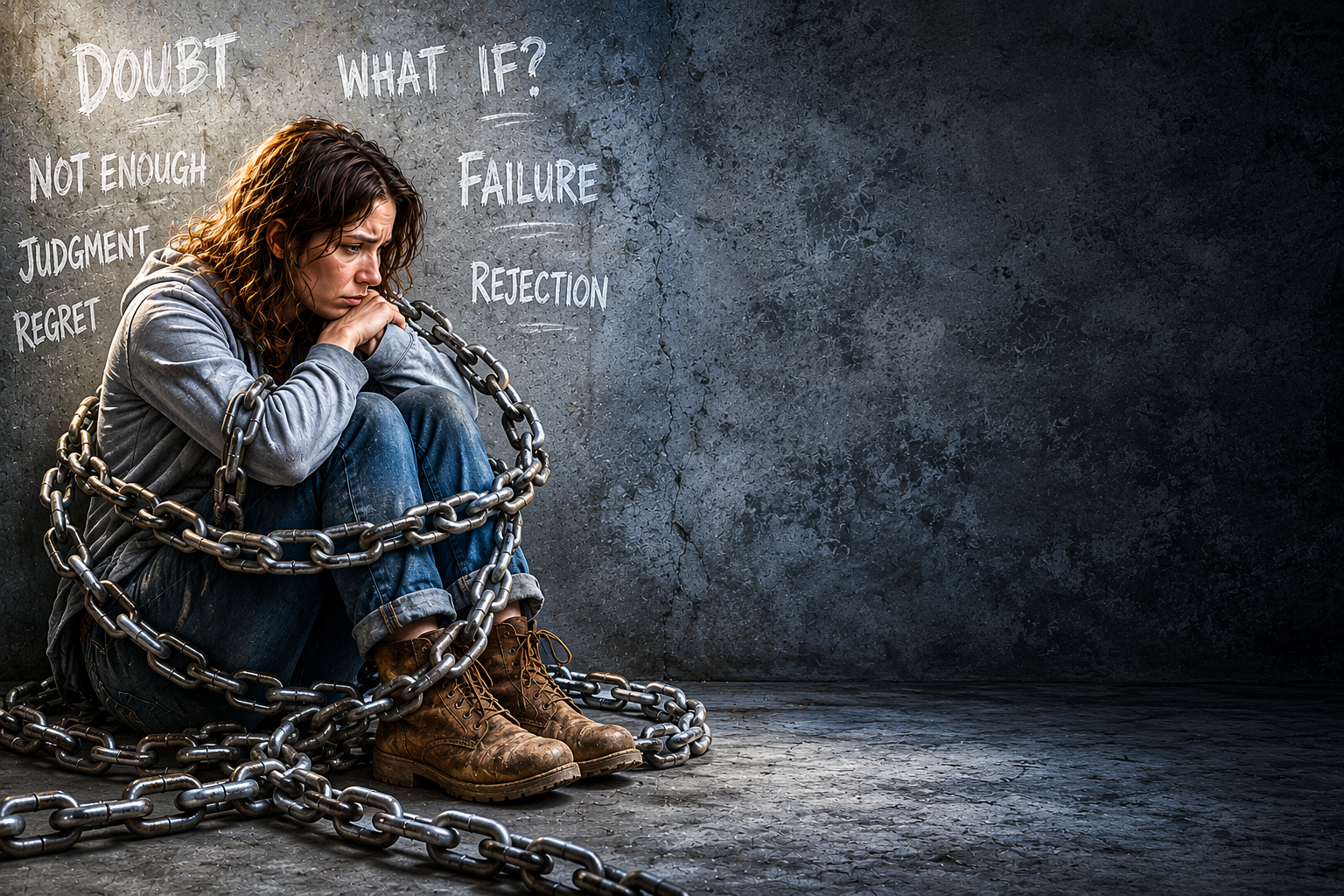
One of the most common patterns I see in my coaching clients is hesitation.
Not laziness.
Not lack of talent.
Not lack of desire.
Hesitation.
People often know exactly what they want to do, say, create, pursue, or change. The problem is that fear keeps interrupting like an overly cautious consultant who was never hired but still has strong opinions.
Whether it’s speaking in front of a crowd, starting a business, pursuing a creative dream, ending an unhealthy relationship, changing careers, or finally having an honest conversation, fear has a remarkable ability to redirect people straight into the neighborhood of “Maybe someday.”
And unfortunately, ‘someday’ keeps getting postponed.
Instead of acting, people prepare endlessly. They overthink. They research. They make plans. They ask for advice from fourteen different people, including one cousin who has never successfully done anything but somehow still speaks with tremendous authority.
Months pass.
Sometimes years.
Eventually, people become incredibly skilled at avoiding discomfort while convincing themselves they are “still working on it.”
Meanwhile, children are out there living life like tiny stunt performers with snack breaks.
You know what I mean.
A child falls off a bike, cries with Oscar-worthy emotion for forty-two seconds, accepts a cookie as part of the recovery process, and then jumps right back on the bike like nothing happened.
Children are naturally curious, resilient, and willing to engage with life before they feel completely ready.
Adults, however, often want guarantees.
Kids think:
“Why not try?”
Adults think:
“But what if this becomes embarrassing and I remember it at 3:00 a.m. for the next decade?”
Children run into life. Adults often stand at the edge of it conducting detailed risk assessments.
At some point, many of us learned that avoiding discomfort became more important than experiencing life fully. So we start protecting ourselves from rejection, criticism, failure, uncertainty, and vulnerability.
Eventually, we become so careful that we accidentally stop living boldly at all.
- Fear Sounds Surprisingly Reasonable
Fear rarely announces itself dramatically.
It usually sounds practical.
“Wait until you feel more confident.”
“You need more preparation.”
“Maybe next year.”
“What if you fail?”
“What if people judge you?”
Fear can sound incredibly logical while quietly convincing you to stay small.
A fear-based person spends much of life waiting:
Waiting for confidence.
Waiting for certainty.
Waiting for the right moment.
Waiting for anxiety to disappear first.
That is a very long waiting list.
The truth is, courage usually does not arrive with fireworks and inspirational background music. Most of the time courage simply whispers:
“Take the next step anyway.”
- Tiny Steps Count More Than Giant Intentions
If you want to change your life, begin with something that genuinely matters to you.
Ask yourself:
“What would I pursue if fear stopped acting like my personal life advisor?”
Then start small.
Not “quit your job tomorrow and move to another country because you watched two motivational videos” small.
Just one honest, manageable step.
Send the email.
Make the call.
Sign up for the class.
Speak up in the meeting.
Submit the application.
Audition.
Write the first page.
Small courageous actions create momentum, and momentum changes people.
Confidence is rarely something people magically discover while sitting safely inside their comfort zone. Confidence is built through action. Every time you move forward despite discomfort, you teach yourself that fear is survivable.
And celebrate progress along the way. Sometimes simply not talking yourself out of something deserves recognition.
- Stop Rehearsing Catastrophes
Most anxiety lives in the future.
People spend enormous amounts of mental energy rehearsing conversations that have not happened, imagining disasters that never occur, and predicting outcomes with the optimism of a malfunctioning weather app.
Meanwhile, life is happening now.
Practice staying where your feet are.
Fear also exaggerates. Your inner critic may sound convincing, but it is often dramatic, inaccurate, and operating without evidence. Learn to question the fearful stories you tell yourself about failure, rejection, or not being enough.
And pay attention to who surrounds you.
Some people encourage growth, courage, creativity, and authenticity.
Others hand out discouragement like free samples at a grocery store.
Choose carefully.
- Learn to Tolerate a Little Discomfort
Growth almost always requires some discomfort.
Not unbearable suffering.
Not “live alone in the wilderness with no Wi-Fi” discomfort.
Just enough discomfort to stretch beyond your familiar patterns.
Every successful, creative, resilient person you admire has experienced setbacks, rejection, embarrassment, mistakes, and failure. The difference is they did not decide those moments defined them.
They kept going.
Failure is feedback, not identity.
Fear itself is not the enemy. Fear is part of being human. The real problem begins when fear becomes the primary decision-maker in your life.
When we stop hiding behind perfectionism, endless preparation, and avoidance, we begin living more honestly and courageously – from the inside out.
So choose something today that matters to you.
Not next year.
Not when you finally feel fearless.
Not after you reorganize the garage, answer every email, and achieve complete emotional enlightenment.Do not wait for it because it is not going to come on its own, no matter how much you want it.
Are you ready to take that first step?
Please note: I reserve the right to delete comments that are offensive or off-topic.