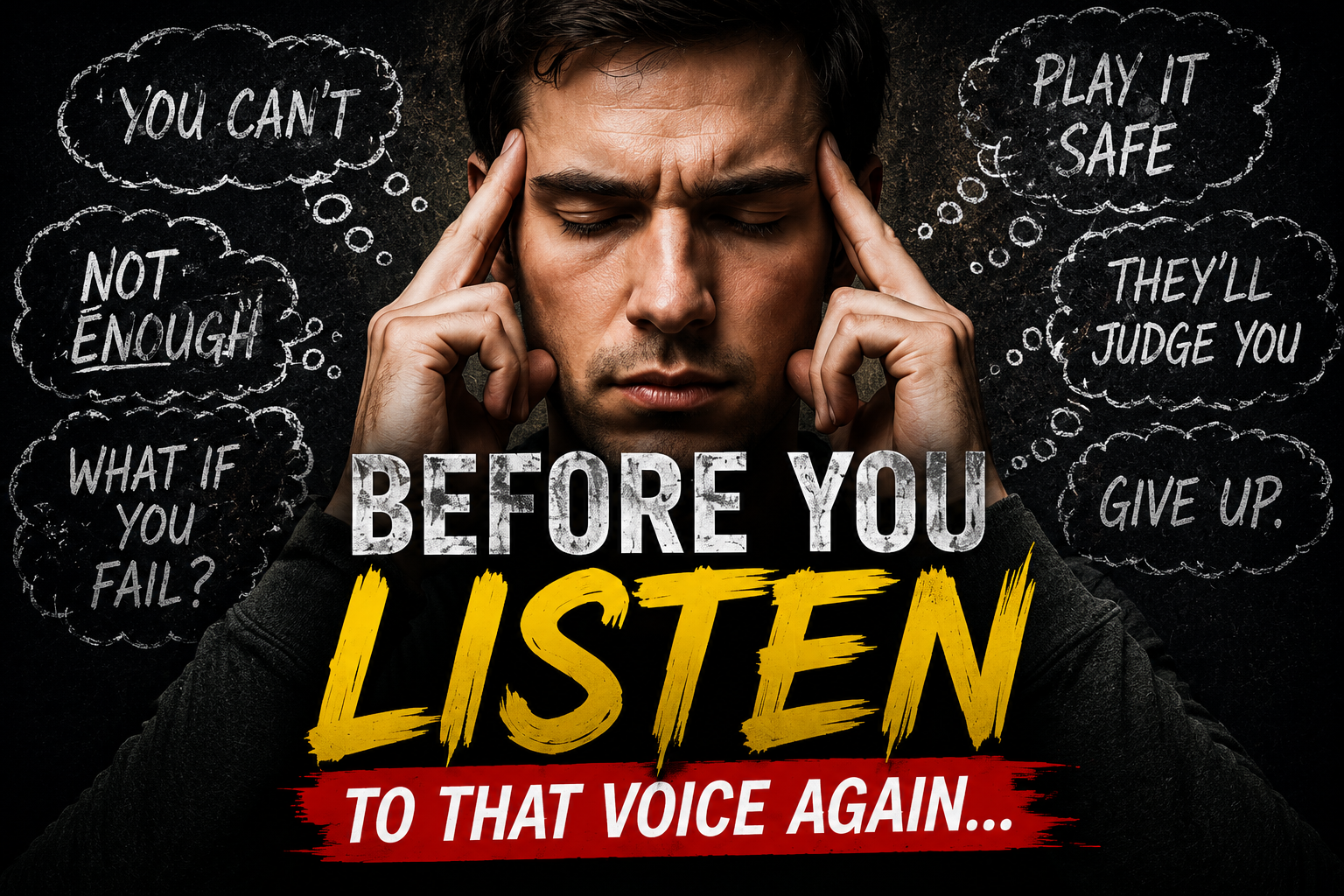
One of the greatest obstacles to living from the inside out isn’t what happens to us. It’s what we repeatedly tell ourselves about what happens to us.
Far too many people spend years – sometimes decades – allowing fear, anxiety, and self-doubt to become the loudest voices in their lives. You know the voice.
The one that shows up right before a presentation, a performance, a difficult conversation, or a new opportunity and says:
- “You’ll embarrass yourself.”
- “You can’t handle this.”
- “You’re going to fail.”
- “What if everything goes wrong?”
- “Better stay where it’s safe.”
What’s amazing is that this voice has a terrible track record and yet somehow keeps getting promoted. It predicts disasters that never happen. It exaggerates problems. It questions your abilities.
And despite all of that, many of us continue treating it like a trusted advisor. The longer you listen to that voice, the more convincing it becomes. Eventually, fear stops being something you experience and starts becoming part of who you think you are.
Instead of saying, “I feel anxious,” you begin saying, “I am an anxious person.” Instead of, “I’m nervous about speaking,” it becomes, “I’m just not a speaker.” Fear begins to steal more than your peace of mind. It starts stealing opportunities, relationships, experiences, and dreams.
That’s why learning to manage your inner dialogue is one of the most important skills you can develop.
Step 1: Stop the Thought
When you notice an anxious or self-defeating thought beginning to gain momentum, interrupt it. Immediately.