If you cannot ‘see’ yourself performing well, or living life without anxiety and fear, then you have very little chance of actually doing that, especially under pressure.
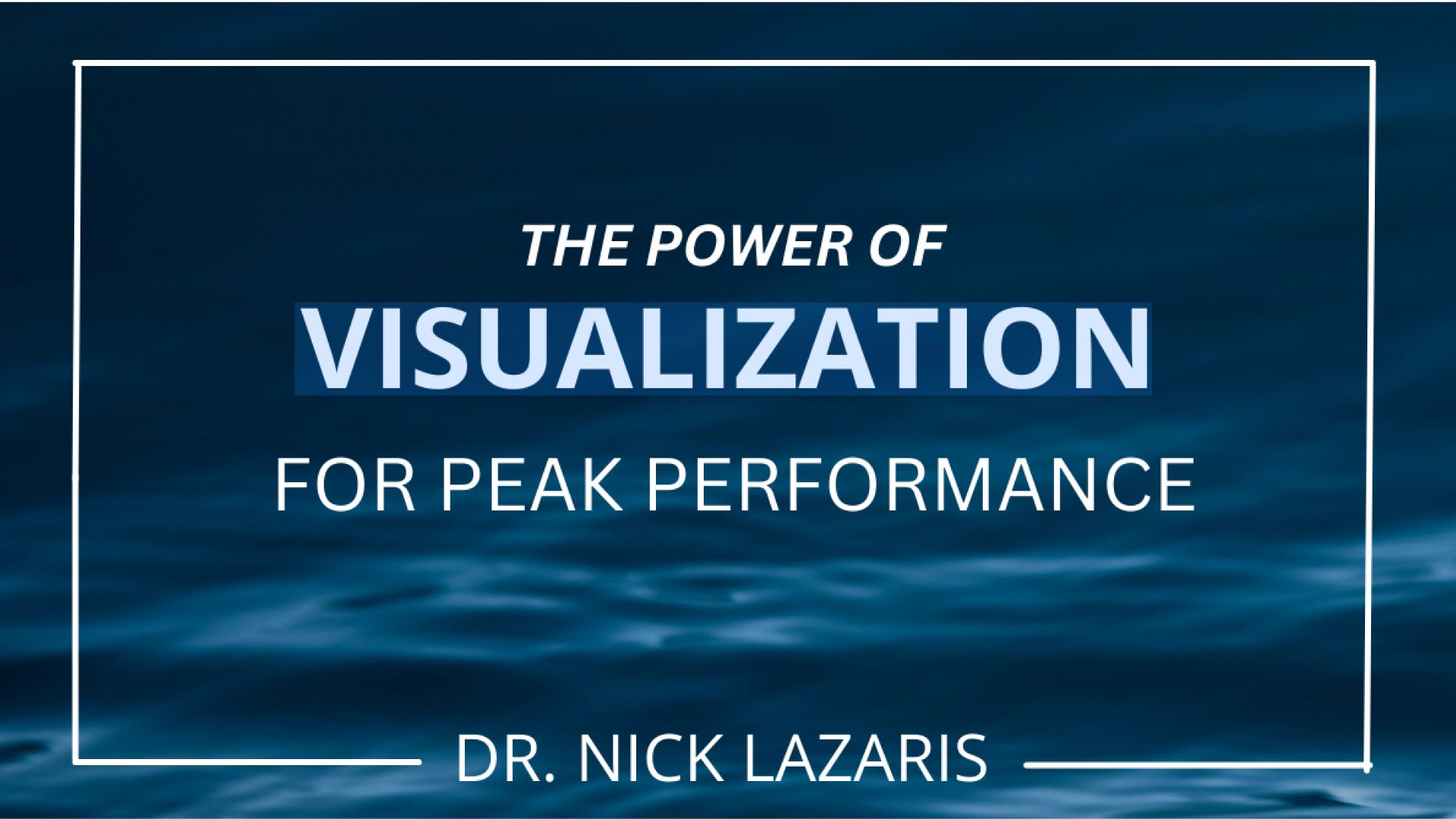
In this video, I share a powerful performance enhancement skill that, when practiced and applied, allows you to rehearse, review and focus on optimal performance in any stressful situation.
Click here to watch the short, but powerful, video.
Here is a quote that says it all if your desire is to move past your fears and achieve your dreams and goals:
“It is important that you get clear for yourself that your only access to impacting life is action. The world does not care what you intend, how committed you are, how you feel or what you think, and certainly it has no interest in what you want and don’t want. Take a look at life as it is lived and see for yourself that the world only moves for you when you act.” ~ Werner Erhard
Pretty straightforward, right? We can plan, dream, and make vision boards all day long – but nothing changes until we actually do something. Action is the bridge between where you are now and where you want to be. Without it, even the best intentions stay stuck in your head.
So how do you start moving from your desires and good ideas to real progress? Here are four practical steps:
1. Start Small – Really Small
Big goals are exciting, but they can also feel overwhelming. That’s why the trick is to shrink them down into tiny, doable steps (Remember the movie ‘What About Bob?’ – “Baby steps…baby steps…”) . Want to write a book? Forget about the 300 pages – just write one paragraph today. Want to overcome your fear of public speaking – begin a daily practice of deep, focused breathing to calm your anxiety. Want to get healthier? Lace up your sneakers and take a quick walk around the block. Don’t wait for the “perfect plan” – just start where you are.
2. Let Consistency Create Momentum & Power
One action on its own won’t change your life, but repeated actions will. The secret is showing up over and over again, even when you don’t feel like it. Think of it like brushing your teeth – it’s the regular, steady effort that makes the difference, not one big heroic burst. Small steps, stacked up, turn into big wins.
Sometimes, life moves fast – faster than we can keep up. Whether it’s preparing for a big presentation, stepping into a high-pressure performance, or simply feeling overwhelmed by a long to-do list, anxiety has a way of pulling us out of the moment.
In those times, staying present can feel like a challenge. Our minds race ahead in anxious anticipation or through past worries or fears. That’s where a simple technique comes in. It’s called the 5-4-3-2-1 technique, and it’s one of the most grounded ways to bring yourself back into the present moment.
I think of it as mindful distraction. You’re not ignoring what’s happening – you’re gently redirecting your focus to what’s real, right now.
Here’s how it works:
Start with a Breath
Before anything else, pause and take one slow, intentional focused breath. Inhale deeply through your nose… exhale through your mouth. Let your shoulders soften. As I share with my coaching clients, this type of breath is always your entry point to the present.
5 – Notice Five Things You Can See
Take a slow look around. Name five things you can see in your environment. It could be the light filtering through the window, the curve of your coffee mug, a photo on the wall, or the pattern in the rug. Let your eyes settle on each one for just a moment.
4 – Notice Four Things You Can Feel
Now, shift your attention to touch. What’s making contact with your body? The texture of your clothes, the chair beneath you, your hands resting on your lap. Choose four sensations and quietly notice how each one feels.
“When we argue for our limitations, we get to keep them.” – Evelyn Waugh
If you’re dreaming big – whether as a creative, performer, entrepreneur, or anyone with a bold vision – then you already know this truth: your words shape your world.
In Part 1, I shared how certain words can quietly kill our creativity, confidence, and joy. Not just the words others say to us – but the words we say to ourselves.
And if you’ve ever wondered why a goal feels out of reach or why you stall just before momentum kicks in, chances are, it’s not your talent or ability holding you back. It’s your inner voice.
Here are six more dream-killing words and phrases to watch for. Each one may sound subtle – even reasonable – but together, they can quietly derail your goals and delay the life you’re meant to live.
Let’s rewrite the story.
6. “It’s hard”
Let’s be honest: dreams can be hard. But “hard” doesn’t mean “impossible.” When we label something as too difficult, we start shrinking our goals down to something safer, smaller, more manageable – and far less exciting.
You weren’t born to settle. Instead of saying, “It’s hard,” try: “This will grow me.” “I’m willing to figure it out.”
That’s how every breakthrough begins.
7. “Yes, but…”
This phrase pretends to be supportive, then pulls the rug out from under your progress. “I’d love to launch my business, but I don’t have the time.” “I really want to perform again, but I’m rusty.”
Every “yes, but…” is a dream shrinker. Replace it with: “Yes, and…” “I’m figuring out how.”
“Sticks and Stones May Break My Bones, but Words Will Never Hurt Me.”
You’ve been lied to.
Maybe not intentionally, and probably by people who cared about you – teachers, parents, mentors. But still, it was a lie. And here it is:
“Words can’t hurt you.”
Not only can words hurt, but they have the power to shut down your dreams, limit your future, and slowly kill off your belief in what’s possible.
“Death and life are in the power of the tongue.” – Proverbs 18:21
I’ve worked with countless people over the years – artists, performers, entrepreneurs – who carry the weight of words spoken to them decades ago. Words that made them feel small, incapable, or not good enough. Words that still echo in their minds when they think about taking a leap or chasing a big dream.
But here’s what’s even more dangerous: the words we say to ourselves.
Yes, those quiet phrases you whisper internally. The doubts. The hesitations. The excuses disguised as logic. These are the real dream killers.
Below are five words and phrases that sabotage progress and passion. Recognize them. Replace them. And you’ll begin unlocking momentum toward the life and work you truly want.
1. “Wishing and Hoping”
This might sound harmless but wishing and hoping often become passive substitutes for doing. You wish for success. You hope things turn around. But unless those feelings are backed by action, nothing changes.
“Wishing and hoping won’t get you into his arms…” – Dionne Warwick
The same goes for your goals: they won’t land in your lap. They require courage, consistency, and risk. Wishing is fine to start – but make sure it leads to action.
2. “Maybe”
“Maybe I’ll try someday.” “Maybe I’ll put myself out there.” “Maybe I’m just not ready.”
“Maybe” is a comfort zone in disguise. It gives you a way out. It allows you to feel like you’re considering something while avoiding any real decision. But no dream ever takes shape in the fog of “maybe.”
If you want to create a life of purpose and passion, swap “maybe” for a bold “yes” or a clear “no”—anything that moves you forward with intention.
n my coaching work, I meet so many driven, thoughtful people who are doing all the right things—they work hard, show up consistently, and genuinely want to grow.
They’re chasing goals, building careers, nurturing relationships… yet something still feels stuck. Progress is slow, motivation dips, and frustration creeps in.
When that happens, I usually pause and ask a few key questions that go straight to the heart of the issue:
What are you tolerating in your life that’s keeping you from your goals?
Are there people or situations draining your energy or blocking your joy?
What “anchors” are weighing you down and stopping you from rising higher -personally or professionally?
These aren’t easy questions, but they’re powerful ones.
Because the truth is: we all put up with more than we realize.
We’ve Been Trained to Tolerate
Somewhere along the way, we learn to normalize discomfort.
We get used to saying “yes” when we want to say “no,” accept behavior that crosses our boundaries, and let guilt, fear, or fatigue call the shots.
We tolerate clutter – mental, emotional, and physical. We tolerate fear and anxiety. We tolerate jobs that drain us. We tolerate toxic relationships. We even tolerate our own self-doubt and harsh inner voice.
And all of this comes at a cost.
The more we tolerate, the less energy, clarity, and confidence we have to go after what we truly want.
Step One: Start With Awareness
Before you can change anything, you have to see it.
So take a quiet moment and ask yourself this simple, powerful question:
“Every child is an artist. The problem is how to remain an artist once he grows up.” ~ Pablo Picasso
At one point in your life, you were fearless. Truly. Science suggests that as children, we’re born with only two innate, foundational fears: the fear of falling and the fear of loud noises. Everything else? Learned.
Over time, through experiences, social conditioning, and the words or actions of those around us, we begin to absorb fear. Slowly but steadily, we trade wonder for worry. Creativity for caution. Bravery for approval.
Picasso’s quote, while about art, points to something much broader. It reminds us that the courage, imagination, and authenticity we had as children don’t vanish – they get buried. But they’re still there, waiting.
Maybe today is the day you begin to dig them out. Maybe today, you choose to start – or continue – the work of becoming that fearless child again. The one who dared to dream. The one who didn’t second-guess their worth or ability to do something extraordinary.
You don’t have to keep growing into a more anxious version of yourself. You can unlearn the doubts. Let go of what’s holding you back.
In what area of your life are you playing it safe? What is a small step that you can take today to begin moving towards your dreams and goals?
Freedom is possible. The child within you already knows how.