
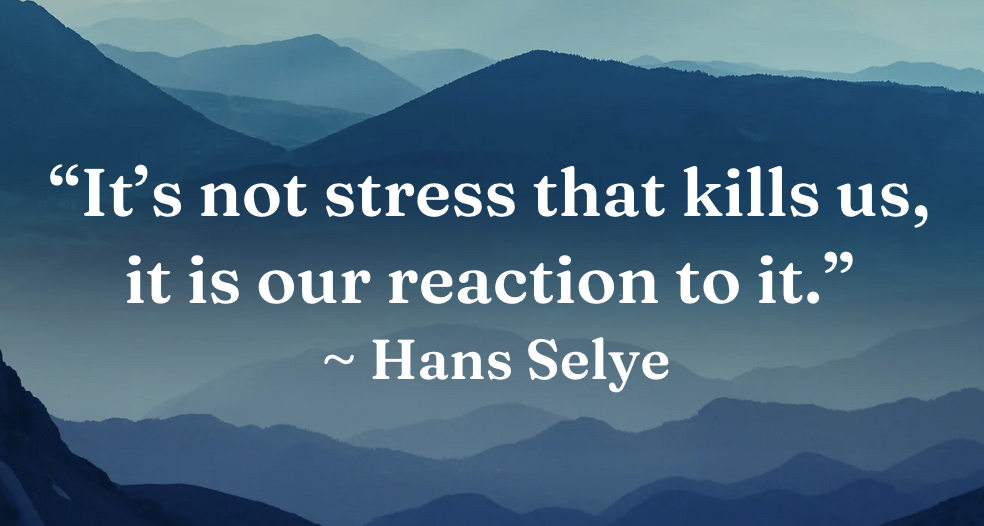
In my coaching work, I have discovered that stress in general has a bad reputation. In fact, we talk about it like it’s our enemy – something to be eliminated, escaped, or managed into oblivion. But Hans Selye, the pioneer of stress research, flips the script.
Stress itself isn’t the real problem. Our reaction to it is.
Think about it: stress is unavoidable. Deadlines, traffic, work or performance situations, difficult conversations, unexpected bills, world news – stress is woven into everyday life. If stress alone were fatal, humanity would’ve disappeared centuries ago! Yet people thrive, innovate, and grow under pressure all the time. The difference isn’t the absence of stress; it’s how we interpret and respond to it.
When stress shows up, the body does what it’s designed to do. Our heart rate increases, muscles tense and we experience extreme overthinking. This is the same response that helped our ancestors escape danger and make it through challenging times. In modern life, however, we often treat this natural reaction as a sign that something is wrong. We label stress as dangerous, overwhelming, or intolerable – and that interpretation pours fuel on the fire.
Our reaction is where the damage happens. When we resist stress, catastrophize it, or tell ourselves we “can’t handle this,” the nervous system stays stuck in high alert.
Stress producing cortisol lingers. Our sleep suffers. Our ability to make productive decisions narrows.
Over time, that chronic state of stress and anxiety- not the stressor itself – wears us down.
But there’s another option.
What if stress were viewed as information rather than a threat? A signal that something matters. A prompt to pause, prioritize, or prepare.
Studies show that when people interpret stress as helpful – energizing rather than harmful – their physical response changes. Blood vessels stay more relaxed. Recovery is faster. Performance improves. Anxiety is reduced.
Same stress. Different reaction.
This doesn’t mean pretending everything is fine or forcing positivity. It means choosing a more empowering frame.
Instead of “This is too much,” try “This is challenging, and I can meet it.” Instead of “I’m stressed,” try “I’m activated to do well because this matters.”
Language shapes perception, and perception shapes physiology.
We can’t always control what life throws at us. But we can influence how we meet it. A deep breath. A reframed thought. A moment of perspective. These small shifts change the entire experience of stress.
Selye’s insight is a reminder of personal power. Stress is part of being alive. Our reaction determines whether it becomes a silent killer – or a catalyst for strength, growth, and resilience.
I’d love to hear your thoughts. You can email me at nick@drnicklazaris.com.
Please note: I reserve the right to delete comments that are offensive or off-topic.